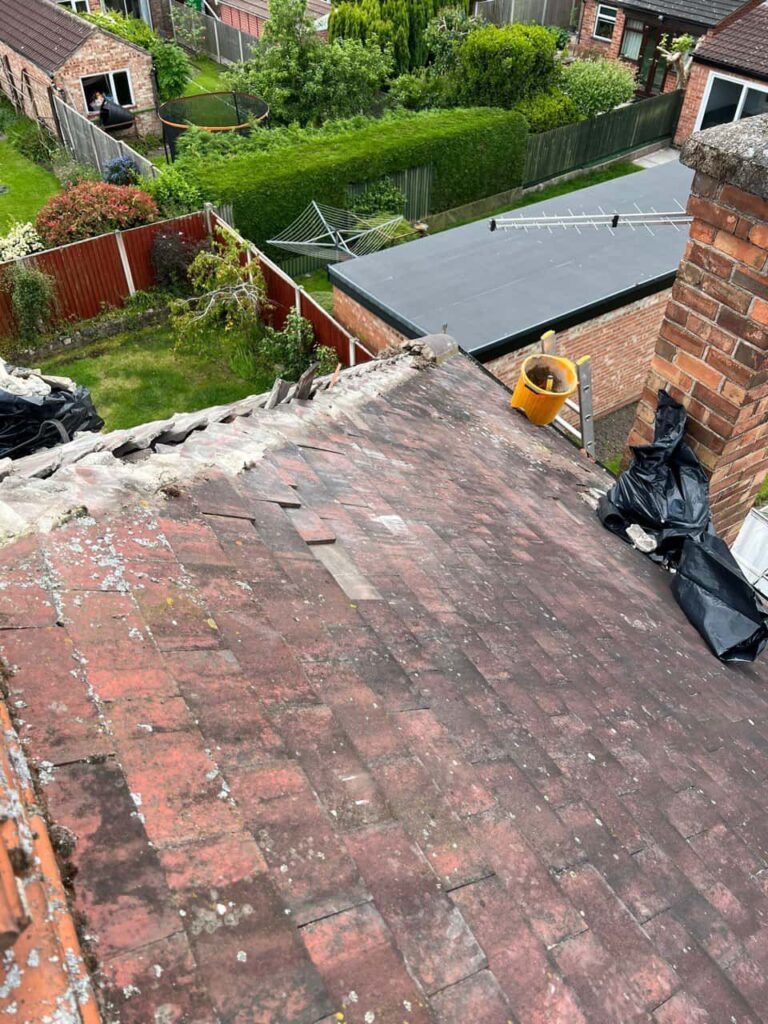
A slipped slate is a relatively common roofing problem, but when slates begin slipping repeatedly or in different areas, homeowners may understandably question whether individual repairs are still sufficient. Replacing the displaced slate may correct the immediate opening in the roof covering, but it does not necessarily explain why the slate became loose in the first place.
Repeated slippage can have several causes. Individual slates may be damaged, fixings can deteriorate, surrounding materials may no longer provide dependable support, or the roof covering may be showing broader signs of age and wear. The important step is to identify which of these conditions applies before deciding whether repair or more extensive work is appropriate.
For homeowners in Rainworth, Lincolnshire, a professional assessment can establish whether slipped slates remain an isolated repair issue or indicate that the overall reliability of the slate roof is changing.
When Do Repeatedly Slipping Slates Indicate a Wider Roofing Problem?
One slipped slate does not mean that a slate roof needs replacing. Even several isolated defects over a long period may be repairable when the surrounding roof remains in good condition.
Concern increases when slates repeatedly move across different sections of the roof or previously secure areas begin developing similar problems.
At this stage, the condition of the complete roof covering becomes more important than the latest displaced slate. A professional inspection can determine whether individual failures remain localised or whether the materials responsible for keeping the slates secure are deteriorating more widely.
Why Do Roof Slates Slip?
Slates need to remain securely positioned while maintaining the correct overlap with neighbouring materials.
A slate can slip when the components holding it in place no longer perform correctly. The slate itself may also become damaged around its fixing points, allowing it to move even though much of the material remains intact.
Possible causes can include:
- deterioration of slate fixings
- damage around fixing holes
- cracked or weakened slates
- deterioration affecting supporting materials
- previous repairs that are no longer secure
- movement within surrounding roof materials
- localised weather-related damage
Determining the cause is essential because simply putting a slate back into position may not resolve an underlying weakness.
One Slipped Slate Is Usually Different From Widespread Slippage
The number and distribution of slipped slates provide useful information.
If one slate has become displaced while the surrounding covering remains secure, a localised repair may be entirely appropriate. The affected area can be inspected, the cause established and suitable work carried out.
If slates are slipping across several sections, the situation deserves broader investigation.
Multiple failures can suggest that the issue is no longer limited to individual slates. Fixings or other components across the roof may be reaching a similar stage of deterioration.
Fixing Condition Is an Important Consideration
The visible slate is only part of the roofing system.
Slates depend on their fixings and supporting construction to remain correctly positioned. These components experience years of exposure and can deteriorate as the roof ages.
When fixing deterioration is confined to a small area, repair may still provide an effective solution.
However, if fixings are failing throughout the roof, repeatedly replacing individual slipped slates may address each symptom without correcting the wider reason the problems continue to develop.
The Condition of the Slates Themselves Matters
A slate roof can sometimes retain sound roofing materials even when individual components require attention.
Natural slate is capable of remaining serviceable for a considerable period when it remains structurally sound. Therefore, repeated slippage should not automatically be interpreted as evidence that every slate has failed.
The individual slates need to be examined for cracking, deterioration and weakness around their fixing points.
If the majority remain sound, the condition of the fixings and supporting roof construction becomes particularly important when determining the appropriate approach.
Previous Repairs Can Provide Useful Clues
A roof that has required occasional slate repairs over many years is not necessarily unreliable.
However, the frequency and location of those repairs matter.
If the same area repeatedly loses slates, there may be a local weakness that has not been fully addressed. If repairs are increasingly required across unrelated sections, this can suggest that deterioration is becoming more widespread.
Reviewing the pattern of previous problems helps provide context for the latest slipped slate.
Slipped Slates Can Leave the Roof Vulnerable to Water Ingress
Slate roofs rely on carefully arranged overlaps to direct rainwater towards the roof edge.
When a slate moves out of position, it can create an opening within this arrangement. Depending on its location and the surrounding conditions, water may then reach areas beneath the main covering.
This is why a slipped slate should not simply be regarded as a visual problem.
Even if no dampness is immediately apparent inside the property, the affected section should be assessed and corrected appropriately.
Why Water Ingress May Appear Away From the Slipped Slate
An internal damp patch does not necessarily appear directly beneath the visible defect.
Water entering through a displaced slate can travel along underlying materials or structural components before becoming noticeable inside the property.
This can make diagnosis more difficult, particularly if several slates have moved or the problem has been present for some time.
Professional investigation can consider the suspected entry point alongside the route water may have taken, helping distinguish between a simple slipped-slate repair and a more extensive problem.
Does an Older Slate Roof Automatically Need Replacing?
No. Roof age should provide context rather than determine the decision by itself.
An older slate roof may still contain large areas of sound material. If slippage is confined to one section and the surrounding construction remains reliable, targeted repair may continue to be suitable.
Conversely, repeated failures across numerous areas can indicate that the roof’s overall condition is changing.
The key question is therefore not simply how old the roof is, but how well its different components are continuing to perform.
When Can Individual Slate Repairs Remain Appropriate?
Repair may remain a sensible approach when:
- slipped slates are limited to a small area
- the cause of the movement can be identified
- neighbouring slates remain secure
- the majority of the roof covering remains in good condition
- supporting materials remain dependable
- previous repairs are continuing to perform correctly
In these circumstances, there may be no reason to disturb large sections of serviceable roofing.
A properly planned repair should address why the slate moved as well as restoring the covering itself.
When Does Repeated Slippage Become More Concerning?
Repeated slippage deserves closer attention when the pattern changes.
If homeowners begin noticing new displaced slates regularly, particularly across different parts of the roof, the likelihood of a broader issue becomes greater.
Other signs can include widespread deterioration, numerous previous repairs, several loose or damaged slates and recurring water ingress.
No single symptom automatically determines that replacement is necessary. Together, however, they can indicate that the roof should be assessed as a complete system rather than through individual repairs alone.
Why Constantly Replacing Slipped Slates May Not Solve the Cause
There is an important difference between repairing damage and repeatedly treating symptoms.
If a slate slips because of an isolated defect, replacing or securing it can provide a suitable repair. If slates are slipping because fixings across the roof are deteriorating, dealing with each slate only after it moves does not address the underlying pattern.
This is why repeated slippage should eventually prompt a broader assessment.
At Rainworth Roofing Repairs, we consider the displaced slates alongside the surrounding covering, fixing condition and relevant roof details. This helps determine whether continued localised repair is appropriate or whether the roof requires a more comprehensive approach.
Why the Surrounding Roof Should Be Checked
Inspecting only the slate that has already slipped provides limited information.
Neighbouring slates may show early signs of movement or deterioration even though they remain in position. Examining the wider area can identify these developing weaknesses before additional slates become displaced.
Where several areas have already experienced problems, assessing the complete roof provides an even clearer picture.
For homeowners in Rainworth, Lincolnshire, this condition-led approach helps avoid assuming either that the entire roof needs replacing or that every new slipped slate should automatically be treated as an isolated fault.
What Would Make Roof Replacement More Appropriate?
Replacement becomes more relevant when deterioration is sufficiently widespread that localised repairs are no longer restoring dependable overall performance.
For a slate roof, this may involve repeated failures across numerous sections, extensive fixing deterioration or problems affecting the supporting roofing system.
The objective of replacement in these circumstances is not simply to prevent the next slate from slipping.
It is to restore the roof as a consistent weather-resistant system and address the reason that individual repairs are becoming increasingly necessary.
Professional Assessment Helps Avoid Unnecessary Work
The presence of slipped slates should lead to investigation rather than assumptions.
A professional assessment can establish how extensive the problem is, whether the existing slates remain serviceable and what condition the relevant supporting components are in.
This provides a reliable basis for choosing between targeted repair and more extensive work.
Where the roof remains fundamentally sound, appropriate repairs can preserve serviceable materials. Where deterioration is widespread, identifying that condition can prevent the roof from being managed indefinitely through isolated repairs that no longer address the bigger issue.
Conclusion
A slate roof does not necessarily need replacing simply because one or more slates have slipped. Localised slippage can often be repaired successfully when the cause is identified and the surrounding roofing materials remain in good condition.
Repeated slippage across different sections deserves more careful investigation. It can indicate deterioration affecting fixings, individual slates or other parts of the roofing system, particularly when problems are becoming more frequent.
The decision between repair and replacement should therefore be based on the overall condition of the roof rather than the number of slipped slates alone.
If slates keep slipping from your roof in Rainworth, Lincolnshire, contact Rainworth Roofing Repairs. We can assess the affected areas, investigate why the slates are moving and recommend an appropriate approach based on the condition of the complete roof.
Call us on: 01623 579 292
Click here to find out more about Rainworth Roofing Repairs
Click here to complete our contact form and see how we can help with your roofing needs.